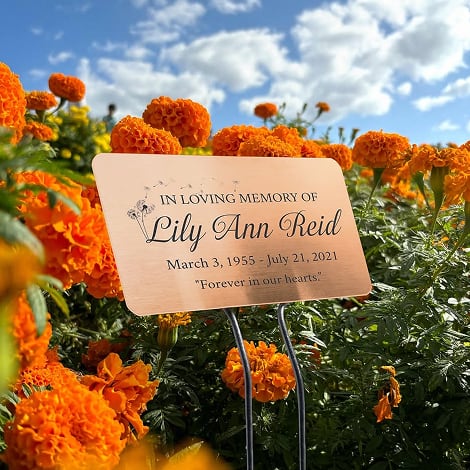
Memorial and Dedication Plaque Design & Personalization Options
While a great variety of options mean plaques can be as elaborate as you choose, too many options can sometimes be confusing. To help steer you in the right direction, you should remember that the design should reflect the person, pet, or event being honored while ensuring clarity and readability. Good design really strikes a balance between expression and pragmatic considerations that include visibility, durability, and space for text.
To that end, let’s look at considerations to keep in mind when designing and personalizing memorial plaques or dedication plaques.
Layout & Lettering
- Centered text is the most common approach as it naturally creates a balanced, formal look. It works particularly well for memorial plaques that prioritize simplicity and dignity.
- Left-aligned layouts tend to work best for plaques with extended text. This layout is most common on dedication plaques that include quotes or organizational acknowledgments.
- Engraved lettering is the opposite of raised lettering. The letters are actually cut into the surface. This makes for strong contrast, which is particularly useful for outdoor dedication plaques where readability from a distance really matters
.
Pro tip: Select a lettering size that will be appropriate to the plaque’s placement. For instance, small text may be appropriate for a close-view garden plaque; larger lettering, though, is necessary for wall-mounted or public-space plaques. PlaqueMaker’s in-house graphic designers can ensure your text and art fit your plaque perfectly.
Fonts & Finishes
- Serif fonts (i.e., those with little “feet” at the ends of letters) convey a sense of tradition and formality. For this reason, they are commonly used for memorial plaques or military/veteran tributes.
- Sans-serif fonts (clean, modern lines, no “feet”) improve readability from a distance and fit contemporary or minimalist designs quite well.
- Polished finishes create an elegant and refined appearance that is wonderfully suited for indoor display, such as in lobbies or churches. In an outdoor setting, polished surfaces can cause glare when in direct sunlight.
- Matte or textured finishes diffuse light, making them easier to read in sunny or bright outdoor settings. To level up, textured backgrounds with raised lettering also give visual depth, improving legibility and style.
Symbols & Imagery
Adding imagery can personalize a plaque, strengthening its connection to the honoree or purpose. Here is some common imagery often featured on memorial plaques and dedication plaques:
- Religious icons. Common religious icons include crosses, Stars of David, crescents, or lotuses. These images, in particular, offer spiritual resonance.
- Military seals, civic emblems, or organizational logos. This type of imagery lends an air of authority and official recognition, which is ideal for dedication plaques tied to institutions.
- Pet-themed symbols. Paw prints, silhouettes, or custom personalized artwork honor our animal companions in a genuine and heartfelt way.
- Etched or UV-printed photographs. Because of the detail, this option allows for a direct likeness of the honoree to be displayed. Etched black-and-white images create a timeless look. UV printing allows for full-color photos with lifelike detail.
Shapes & Sizes
From a distance, plaque shapes and sizes are the first thing people will notice. It’s worth thinking through what that means and what your options are.
- Rectangular plaques have long been, and remain, the most traditional and versatile option for plaques as they are suitable for nearly any placement and situation.
- Ovals, hearts, shields, or scroll shapes certainly add character and offer a deeper level of personalization. Memorial and dedication plaques in these shapes definitely stand out.
- Custom shapes are often chosen for specialized organizational dedications, which can include plaques shaped like state outlines, building silhouettes, or corporate emblems.
- Scale matters: Just as lettering size matters, so does plaque size and scale. For instance, a 4" x 6" garden plaque requires minimal wording and a clean design. In contrast, a large 24" x 36" donor wall plaque may incorporate several elements, including names, logos, and decorative borders, for example.
Color Accents
If you are considering adding color to your dedication or memorial plaque, there are a handful of options to explore.
- Multi-color UV printing really opens the door to more creative and contemporary designs, as it allows photographs, gradients, or even colorful logos to be reproduced in great detail.
Pro Tip: If you are unsure about any design or personalization measure, start simple. A clean layout, with an legible font, and a brief, heartfelt message often carries more sentiment than an overly complex design. Also, adding too many symbols or decorative elements can really reduce readability. (Think of a car with 15 bumper stickers.) Busy design also distracts from your plaque’s primary purpose, which is honoring and remembering.
Wording for Memorial & Dedication Plaques
Finding the right words can often be the most challenging part of designing a memorial or dedication plaque. There is a delicate balance of brevity and meaning; it needs to be brief enough to fit within a limited space, but heartfelt enough to capture the genuine spirit of the honoree or event. Well-done wording ensures your plaque is readable and personal.
Core Structure for Wording
The majority of plaque inscriptions follow a simple structure:
- The Opening phrase. Sets the tone and introduces the dedication.
- In Loving Memory
- Dedicated to
- Honoring the Life of
- With Gratitude
2. The Name of the honoree. This means the full name, including middle name or initials, whichever is preferred.
3. Dates. For memorial plaques, this would mean birth and death years or even full dates if full dates will fit. For dedication plaques, this would be the date of dedication or project completion.
4. A personal message or quote. A short tribute, scripture, or perhaps even an inspirational line that acts as a reflection of the honoree’s values, personality, or contribution.
Wording Examples for Memorial Plaques and Dedication Plaques
Sometimes, all you need to get you started is a few examples. To that end, here are some simple, timeless examples you can use or use for inspiration.
Memorial Plaque Wording Examples
- “In Loving Memory of Daniel A. Mitchell, 1951–2012. Forever in Our Hearts.”
- “Remembering Sarah Clare Day, A Beloved Mother and Teacher, 1945–2017.”
- “Gone but Never Forgotten – James E. Bootz, 1930–2023.”
Dedication Plaque Wording Examples
- “This community park is dedicated to Sylvester Lockett, whose generosity and vision made it possible.”
- “Dedicated to Jonathan Delinski, whose commitment to education inspired generations.”
- “In honor of the donors whose support built this library.”
Pet Memorial Plaque Wording Examples
- “Roxy, Loyal Friend and Companion, 2016–2022. Forever Loved.”
- “In Memory of Gus – Our Faithful Companion, 2002–2013.”
- “Mercedes – A True Friend Who Left Paw Prints on Our Hearts.”
Wording Tips for Dedication and Memorial Plaques at a Glance
We’ve talked about wording structure and looked at some examples. Here, then, are some wording tips to keep in your pocket as you are thinking about wording.
- Short and simple. Try for no more than 20–30 words. When you get past 30 words, you may require a larger plaque or smaller fonts (which can affect readability).
- Reflect the honoree’s personality. What words come to mind when you think of this person? Lighthearted? Formal? Spiritual? Practical? Let those words be your guide so the wording matches their character.
- Add a defining detail. A phrase like “Esteemed Teacher” or “Veteran of the U.S. Air Force” gives context and can make a plaque more personal.
- Collaborate. Put out a call to family members, colleagues, or community leaders who may know or have known the honoree for suggestions for wording that they feel might best capture the essence of the tribute.
- Be selective with quotes or scripture. Opt for text that is timeless and resonates with the honoree’s life. Examples include:
- “Those we love don’t go away, they walk beside us every day.”
- “The Lord is my shepherd; I shall not want.” (Psalm 23:1)
- “To live in hearts we leave behind is not to die.” – Thomas Campbell
- Verify accuracy. This cannot be overstated. Verify spelling of names, titles, and dates carefully; errors can be costly and emotionally painful. Double check. Then triple check.
- Consider the setting. For public dedication plaques, as an example, formal and professional wording is most appropriate. For personal memorials, however, warmth and intimacy work very well.
Wording Guidance by Plaque Type
- Memorial plaques: Place focus on love, remembrance, and legacy. Keep the tone respectful and timeless.
- Dedication plaques: Place emphasis on gratitude, recognition, and contribution. Inclusion of the project or institution name is very common.
- Pet memorial plaques: Wording can be heartfelt, lighthearted, or even playful, depending on the unique relationship shared.
Pro Tip: Remember that the words you decide upon will be read for years to come. So, take your time, gather input, and don’t rush the process just so it’s done. A well-written inscription ensures a plaque truly honors the memory or contribution it represents.